
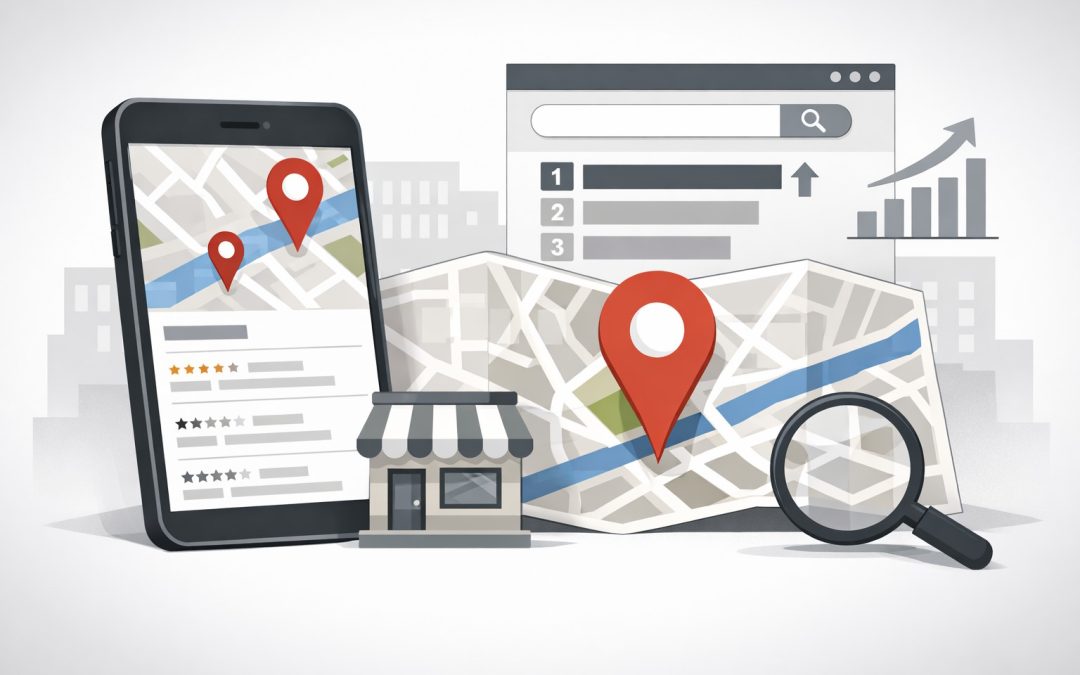
Ranking in Google Maps depends on proximity, reviews, and consistent business signals that show Google your business is real and active. If your business isn’t showing up where it should, it’s usually not random, there are specific reasons behind it.
Once you understand what actually drives rankings, you can focus on the actions that move the needle instead of wasting time on things that don’t.
Why Some Businesses Show Up First on Google Maps
When you search for a service, you’ll usually see a few businesses consistently at the top. That’s not by accident.
Google is trying to show businesses that it trusts the most based on:
- How relevant they are to the search
- How close they are to the searcher
- How strong their overall presence looks
If your business is missing from those top spots, it usually means one or more of these signals is weaker compared to your competitors.
Understanding this helps you shift your focus from guessing to improving the right areas.
The 3 Factors That Actually Drive Google Maps Rankings
There are a lot of theories around Google Maps SEO, but in practice, most rankings come down to three core factors.
Proximity (Vicinity)
Your location relative to the searcher plays a major role.
Businesses that are physically closer to the person searching often have an advantage. This is why having a real, verified location can make a difference, especially in competitive areas.
Reviews
Reviews are one of the strongest signals you can control.
They influence:
- Visibility
- Click-through rates
- Customer decisions
A business with more consistent and recent reviews will almost always outperform one that’s inactive.
Consistency
Your business information needs to match across:
- Your website
- Your Google Business Profile
- Other listings
When everything aligns, Google has more confidence in your business, which can improve your rankings.
Why Having a Real Location Gives You an Advantage
From experience, businesses with a physical office tend to have an edge in Google Maps.
That’s because:
- They are easier for Google to verify
- They align more clearly with proximity signals
- They appear more established
This doesn’t mean service-based businesses can’t rank. But if you don’t have a visible location, you need to be stronger in other areas like reviews and overall profile activity.
Location is one of those factors you can’t fully control, but you can work around it with the right strategy.
Reviews as a Ranking and Conversion Engine
Reviews are not just about reputation, they directly impact rankings.
What matters most
- Volume: Helps you stand out
- Recency: Shows your business is active
- Quality: Builds trust and relevance
The best reviews are the ones where customers mention:
- The service you provided
- Their actual experience
This adds more context to your profile and helps Google connect your business to specific searches.
How often should you ask your customers for a review?
If you’re serious about ranking, you need a consistent review strategy.
- Aim for 1–2 reviews per day if possible
- Adjust based on how competitive your market is
In more competitive industries, you need to be more aggressive just to keep up.
Why consistency beats shortcuts
Some businesses try to take shortcuts with fake reviews or exchanges. This might work temporarily, but it’s not sustainable.
A steady flow of real reviews will always perform better long-term.
Consistency Signals Google Relies On
Google relies heavily on consistent data to validate your business.
Your:
- Name
- Address
- Phone number
- Website
Should match everywhere they appear.
If there are inconsistencies, it creates doubt. If everything aligns, it strengthens your credibility.
This is one of the simplest things to fix, but it’s also one of the most commonly overlooked.
Duplicate Listings Can Split Your Rankings Without You Noticing
One thing most businesses overlook is checking for duplicate Google Business Profiles.
Sometimes duplicates happen because:
- A listing was created years ago and forgotten
- Someone else created a version of your business
- Small variations in your business name triggered a new listing
When this happens, your reviews, authority, and visibility can get split across multiple profiles. Instead of building strength in one listing, you’re weakening all of them.
This can directly affect your rankings without you realizing what’s wrong.
What you should do
- Search your business name in Google Maps
- Look for variations of your name or address
- Check if there are multiple listings for the same business
If you find duplicates, you should:
- Request removal
- Or merge them properly
Cleaning this up helps consolidate your signals and can improve your visibility faster than expected.
What Most Businesses Get Wrong About Google Maps SEO
A lot of businesses spend time on things that don’t really move rankings.
Over-focusing on posts
Posting regularly is fine, but it’s not a major ranking factor. Treating it like a daily task won’t give you the results you’re expecting.
Over-optimizing
Trying to force keywords into every part of your profile can backfire. It often makes your profile look unnatural.
Ignoring real-world signals
Some businesses focus only on the profile itself and ignore what’s happening outside of it.
Google is looking for signs that your business is real and active, not just optimized on paper.
How Long It Takes to Rank in Google Maps
Ranking in Google Maps doesn’t happen overnight.
In most cases, you should expect:
- Around 3 to 6+ months to see meaningful movement
Early improvements can happen faster, especially if your profile has obvious gaps. But long-term positioning takes consistency.
Your timeline will depend on:
- Competition in your area
- Your current profile strength
- How consistent your efforts are
Businesses that stay consistent usually see steady improvement over time.
What Top-Ranking Competitors Are Usually Doing Right
When you look at businesses that consistently rank well, they usually have a few things in common:
- Strong and consistent review flow
- Complete and active profiles
- Real photos and proof of work
- A clear and verified presence
They’re not necessarily doing anything complicated. They’re just doing the basics better and more consistently than others.
This is where most opportunities come from. You don’t need to reinvent the strategy, you just need to execute it better.
Simple Action Plan to Start Improving Rankings
If you want to start improving your position in Google Maps, focus on these:
- Fix any inconsistencies in your business information
- Start asking for reviews consistently
- Upload real photos from your work
- Choose the right categories
These actions may seem simple, but they are the foundation of strong rankings.
The key is consistency. Doing these once won’t move the needle. Doing them regularly will.
Turning This Into a Repeatable System
Google Maps ranking is not a one-time setup. It’s an ongoing process.
The businesses that perform well treat it like a system:
- Consistent updates
- Ongoing review generation
- Regular activity
Once you build this into your operations, it becomes easier to maintain and scale.
This is also where having a clear checklist or process can help you stay on track over time.
Need Help Ranking in Google Maps in Gilbert, AZ?
If your business isn’t showing up where it should, there’s usually a clear reason behind it.
We help businesses in Gilbert and across the Phoenix area improve their visibility by focusing on what actually drives rankings, not guesswork.
If you want to improve your position in Google Maps and turn that visibility into real leads, reach out and let’s take a look at where your profile stands.

Recent Comments